
Our vision at St. Paul’s is to inspire the smallest seeds to flourish so that everyone can reach their full potential. Through our D&T curriculum and wider school opportunities, we want our children to develop through creative opportunities and be inspired to be the designers and makers of our future.
The National Curriculum for Design and Technology aims to ensure that all pupils:
- develop the creative, technical and practical expertise needed to perform everyday
- tasks confidently and to participate successfully in an increasingly technological world
- build and apply a repertoire of knowledge, understanding and skills in order to design
- and make high-quality prototypes and products for a wide range of users
- critique, evaluate and test their ideas and products and the work of others
- understand and apply the principles of nutrition and learn how to cook
Our D&T Curriculum:
Intent
At the core of our school curriculum lie our STAR Curriculum drivers: Success, The World, Aspiration and Resilience.
At St. Paul’s Church of England Primary School, we want our children to develop the knowledge and skills to inspire them to be the designers and makers of our future. We want our children to build resilience to enable them to take creative risks in order to product innovative ideas, through their design and ability to evaluate their outcome. Children instil a love of cooking creating dishes from around the world
Implementation
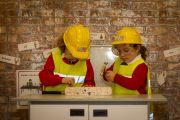
At St Paul’s we follow Kapow’s Design and Technology scheme of work. The scheme is developed around three strands that run throughout. These are:
- Structures
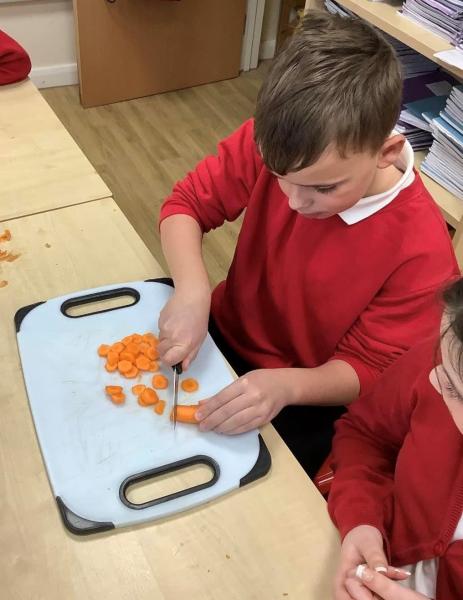
- Cooking and Nutrition
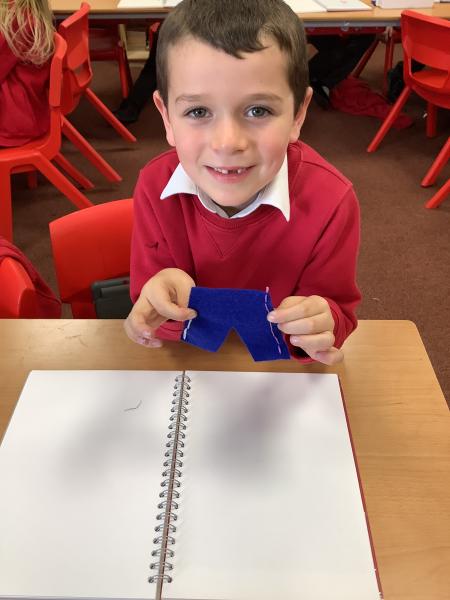
- Textiles
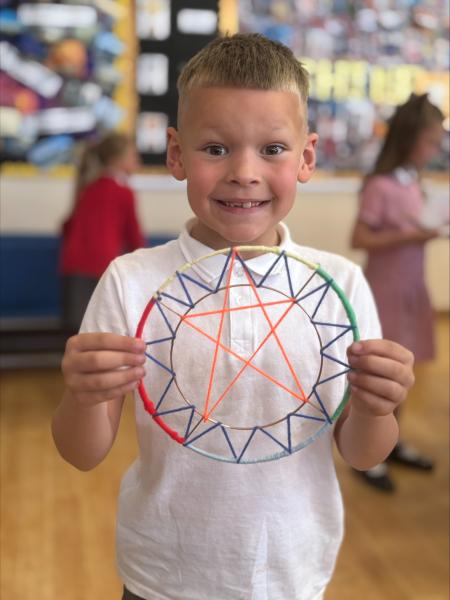
Mechanisms is also taught in Autumn and Spring term, when completing Christmas and Easter cards.
Design and Technology is taught once per term over the year and alternates with Art and Design.
Please see below Whole School D&T overview:
Please see below examples of D&T curriculum units. The full D&T curriculum is available in school and available to see upon request.
Please see below our reading spine for D&T:
Impact:
Kapow Primary curriculum is designed in such a way that children are involved in the evaluation, dialogue and decision making about the quality of their outcomes and the improvements they need to make.
The impact of the scheme is closely monitored through both formative and summative assessment opportunities. Each lesson includes guidance which supports teachers in assessing pupils against the learning objectives and each unit has a unit quiz and knowledge catcher which can be used at the start and end of the unit.
Pupils will leave primary school equipped with a range of techniques and the confidence and creativity to form a strong foundation for their Design and Technology learning reading for Key Stage 3 and beyond.
The role of the D&T subject lead is to monitor the progression of children across school and ensure that the scheme is being taught at a high standard. Evidence of pupil voice will be displayed in whole school progression books where children discuss their artwork.
Assessment
Children will be assessed against their skills at the end of each term. Teachers will base assessment on the skills demonstrated across the topic they have been taught. As children progress throughout St Pauls CE Primary School, objectives will become increasingly complex, building on the skills from previous years.




Early Years
The EYFS framework is structured very differently to the national curriculum as it is organised across seven areas of learning rather than subject areas.
The most relevant statements for D&T are taken from the following areas of learning:
- Physical Development
- Personal Development
- Communication and Language
In preparation for the National Curriculum, children in our Early Years setting will be taught in line with the expectations set out in the EYFS Framework (2021). The children design and evaluate their creations through talk and early mark making, developing upon their communication and language, physical development and early literacy skills. The children focus upon building their fine motor skills before moving onto pre-sewing skills such as, weaving ribbon or wool. Similarly, in the mechanisms element of DT the children focus upon the fine motor skills of cutting shapes before making moving elements for mechanisms in Key Stage One. Pre-wood working in the early year’s foundation stage focuses upon building the children’s expressive arts and design skills. This begins with, making imaginative small worlds or structures with blocks and constructions materials. In reception, the children move these skills further by creating models using junk. The children rip, cut and join a range of materials using different techniques. The children have access to a cookery area which is part of the children’s continuous provision. The children learn about healthy eating, how to use a spoon, knife and fork, how to use a peeler, cook with heat and cook some dishes independently
In Early Years, we integrate elements of the Kapow Design and Technology Scheme within our provision-based learning and also work termly with our resident artist.
Competitions/events
N/A at the moment
Enhanced D&T offer [clubs, competitions]
From starting our school in Reception, children have the opportunity to a range of after school Design & Technology clubs. We currently hold arts and crafts club and lego club.