
Our vision at St Paul’s is to inspire even the smallest of seeds to flourish. We do this in a safe, happy, stimulating environment where our wildest dreams will be encouraged whilst staying rooted in God's love. Through our science curriculum we want our children to thrive and feed their fascination through a knowledge-rich science experience which is delivered through practical investigation and wider school opportunities. We nurture the curiosity and passion for scientific enquiry to provide better understand of the world around us.
The National Curriculum for Science aims to ensure that all pupils:
- develop scientific knowledge and conceptual understanding through the specific disciplines of biology, chemistry and physics
- develop understanding of the nature, processes and methods of science through different types of science enquiries that help them to answer scientific questions about the world around them
- are equipped with the scientific knowledge required to understand the uses and implications of science, today and for the future.
Our Science Curriculum:
Intent
At the core of our school curriculum lie our STAR Curriculum drivers: Success, The World, Aspiration and Resilience.
At St. Paul's Church of England Primary School, we want our children to develop the scientific knowledge and skills of Biology, Chemistry and Physics to become accomplished scientists. As budding Scientists, our children are taught the skills of prediction, questioning, observation, measuring, recording of results and drawing conclusions, as well as scientific facts connected to the science topics that we study.
Through scientific investigation and enquiry, we want our children to explore the wide-ranging career opportunities that scientific knowledge could lead to. Children are encouraged to use scientific vocabulary in their investigations and to explain their thinking.
Implementation
At St Paul’s C.E Primary school we follow the White Rose Science scheme to provide a structured and coherent programme of learning that builds progressively through each year.
White Rose Science provides engaging lesson content in the same progressive, step-by-step method as the White Rose Maths scheme, which has proved very successful here at St Paul’s CE Primary School.
Practical experiences of working scientifically are integral to the White Rose scheme. We aim to inspire and excite children with such activities so that they view scientific learning positively.
White Rose Science Curriculum Mapping
https://assets.whiteroseeducation.com/Resources/science/additional-downloads/Curriculum%20mapping.pdf
Please see below school science overviews:
Please see below examples of science curriculum units. The full science curriculum is available in school and available to see upon request.
Please see below, our reading spine for Science:
Impact:
We recognise the importance of Science and strive to maintain a high profile for the subject within our school. A scientist observes, questions, creates hypotheses, experiments, records data, and then analyses that data. All children can be scientists by following their own natural curiosity and at St Paul’s C.E Primary School, teachers help to facilitate these skills in order for children to flourish.
Assessment
The most important assessments teachers make are during science lessons, as teachers observe, question children and check children’s work. This helps teachers decide how to support and challenge children as they learn.
Children are also assessed using White Rose Science worksheets. This helps teachers understand how much progress towards each step of the key learning of the National Curriculum each child has made and helps the school as a whole understand how successful its science curriculum is.





Early Years
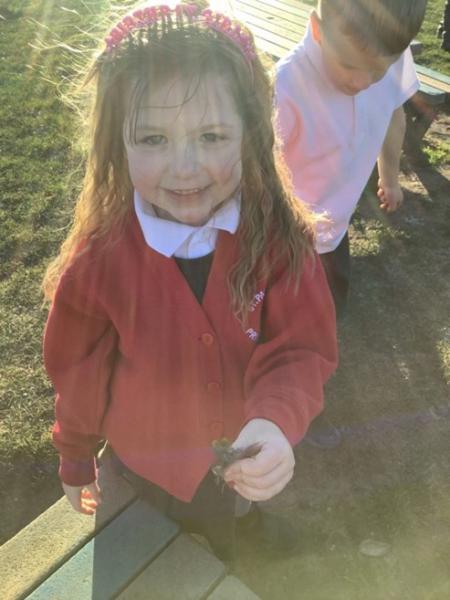
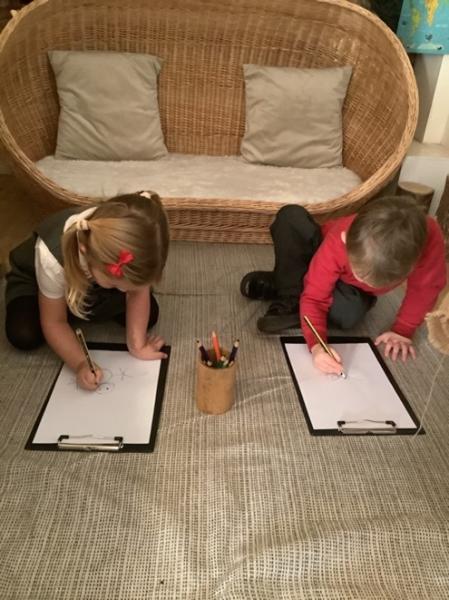
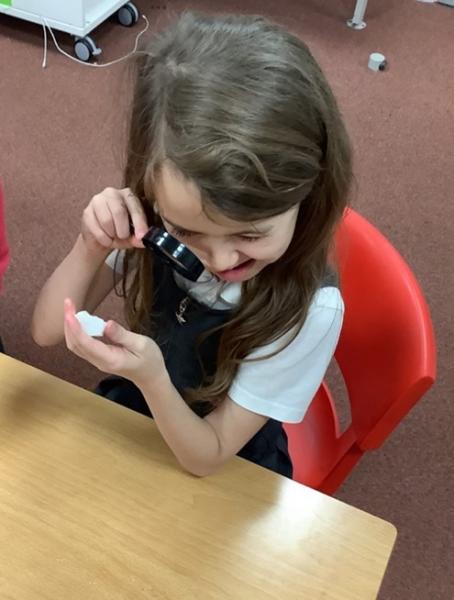
Science in the Early Year’s Foundation Stage is covered within, ‘Understanding the World.’ It is introduced directly through activities that encourage every child to explore, problem solve, observe, predict, think, make decisions and talk about the world around them. During their first years at school our children will explore creatures, people, plants and objects in their natural environment. They will observe and manipulate objects and materials to identify differences and similarities. They will also learn to use their senses. They will make observations of animals and plants and explain why some things occur and talk about changes. Children will be encouraged to ask questions about why things happen and how things work. Children will be asked questions about what they think will happen to help them communicate, plan, investigate, record and evaluate findings.
Enhanced Science Offer
At St Paul’s Primary School, we believe that it is important for all children to know where their food comes from and how to grow their own. We also want them to experience the natural world within the grounds of their school and learn about the importance of providing habitat for wild creatures. In order to provide our children with access to these invaluable learning experiences, we are going to create a science garden during Summer term through our Science club.