In order to read for understanding and enjoyment, it is essential for children to become accurate and efficient readers, for whom decoding is an automatic process, so they can free up their attention to focus on the meaning of what they read.
Reading fluency has a qualitative definition, referring to the quality of children’s reading. This includes the use of rhythm, phrasing, intonation, ‘naturalness’, and use of voice (for different characters or moods). Reading fluency also has a quantitative definition, referring to the accuracy (number of errors, compared to number of correct words read) and the rate (number of words read per minute). The development of fluency starts as soon as children begin to blend sounds to read words in reception.
When our pupils have completed the phonics scheme and passed the phonics screen they progress on to banded books., Our follow-on reading scheme is Big Cat Collins which continues to support reading progress in fluency and understanding. All pupils undertake a reading miscue to determine their accurate level of fluency and are then regularly assessed as they make their way through the programme (at least at the start of every half term).
Comprehension
At St Paul’s, we develop children’s reading comprehension by focusing on these key areas of understanding:
|
Vocabulary |
Prediction |
Sequence |
|
Inference |
Explanation |
Summarise |
These skills are explicitly taught in a progressive way to ensure that children are able to make sense of unfamiliar texts and are able to read across the curriculum with ease and enjoyment.
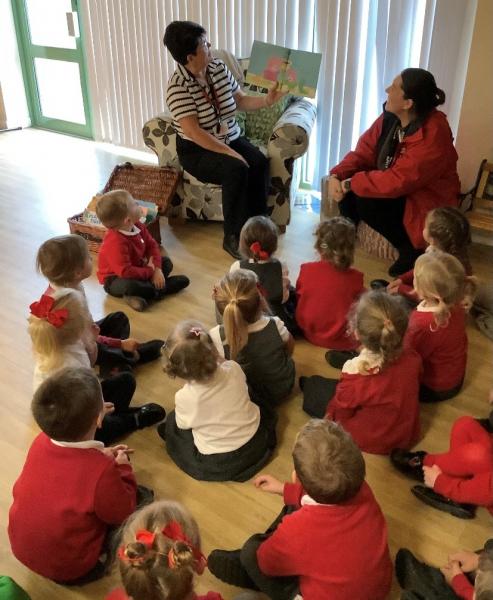
Supported by evidence from the (EEF) our approach to guided reading lessons is underpinned by the development of fluency, stamina, vocabulary acquisition and the explicit teaching/modelling/thinking aloud of the core comprehension skills. Fluency is supported through guided oral reading instruction and repeated reading during these sessions. Whole-class Guided Reading is implemented when pupils have completed the phonics programme. Teachers have a clear understanding of pupils; current capabilities and teach accordingly.
Although the key focus within EYFS and Year 1 is children developing their phonics skills, children will still be encouraged to comment on the content of what they are reading (if appropriate) through teacher-led discussion and questioning.

Home Reading
Children will begin to have reading books sent home from the summer term of nursery. These will be wordless books and are designed to promote discussion between adult and child in order to support language development and get children into positive reading habits.
From Reception until the end of Year 1, children will be sent home with two reading books each week. The first of which will be a Harper Collins Big Cat book. This book will be explicitly matched to the GPCs that children have learnt that week in school. This book will not be unfamiliar to the child as they will have read it as part of their thrice weekly reading sessions in school. By the time children read this book with an adult at home, they will be able to read it with around 93% fluency.
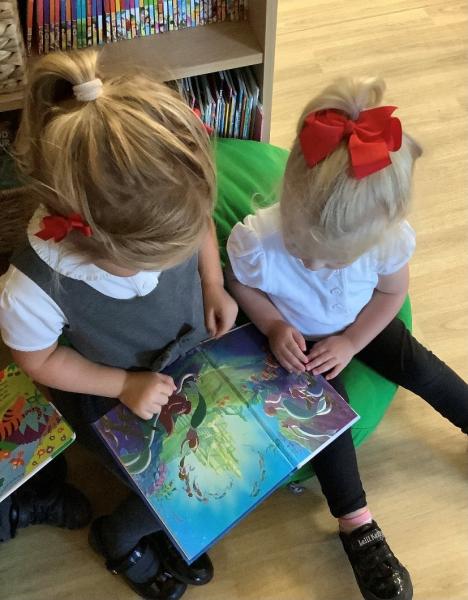
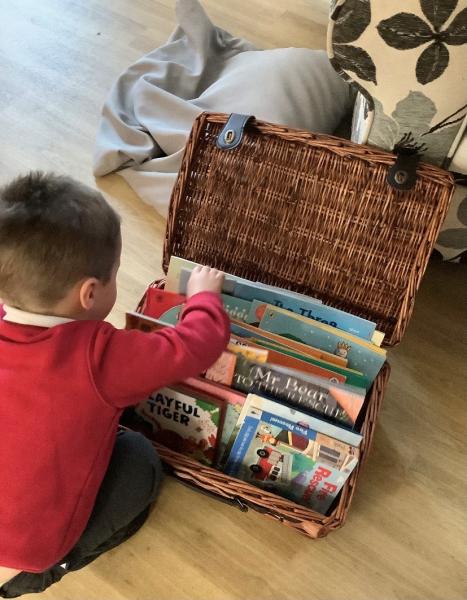
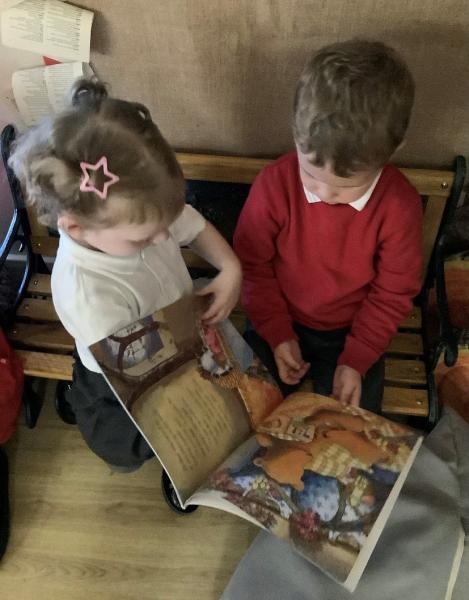
Alongside a weekly phonics book, children in Reception and Year 1 will also bring home a ‘sharing book’. This will be a text that is beyond the decoding ability of the child, however it is a book they have independently chosen in line with their interests. This gives the children an opportunity to explore books, promote choice, and begin to develop a love of reading. There is no expectation that children attempt to read any of their sharing book independently, instead it is encouraged that an adult at home will read to the child.
Once children have passed their Phonics Screening Check at the end of Year 1, they will have demonstrated that they are now able to independently decode unfamiliar texts with increasing fluency. When children enter KS2, they will begin to access Big Cat Collins book banded books. They will take home a book from the programme as well as a ‘reading for pleasure’ book from the library. This book maybe beyond their reading ability but is of their particular interest or choosing for enjoyment.