
Our vision at St Paul’s is to inspire even the smallest of seeds to flourish. We do this in a safe, happy, stimulating environment where our wildest dreams will be encouraged whilst staying rooted in God's love. Through our Languages curriculum, we want our children to be confident and resilient Spanish speakers who will always want to "have a go" and who will do their best to get their message across. We want them to be inquisitive about the Spanish-speaking world and its cultures, and about other world languages and the people who speak them.
NATIONAL CURRICULUM
The national curriculum for languages aims to ensure that all pupils:
- understand and respond to spoken and written language from a variety of authentic sources
- speak with increasing confidence, fluency and spontaneity, finding ways of communicating what they want to say, including through discussion and asking questions, and continually improving the accuracy of their pronunciation and intonation
- can write at varying length, for different purposes and audiences, using the variety of grammatical structures that they have learnt
- discover and develop an appreciation of a range of writing in the language studied.
INTENT
Children at St Paul’s learn Spanish from Year 1 to Year 6. St Paul’s is a feeder primary school for Venerable Bede Academy, where Spanish is taught as the modern foreign language. Many St Paul’s children go on holidays to Spain, and this gives their learning a context.
Key Stage 1
The learning of a modern or ancient foreign language is neither statutory nor an entitlement in Key Stage 1, and therefore there are no national guidelines to follow.
Younger children have the ability to learn languages easily, and St Paul’s would like to take advantage of this. Learning a language provides an enrichment of the curriculum in Key Stage 1.
One of the main aims in teaching a language in Key Stage 1 is to embed routines and key language learning skills so that children can make a flying start to formal language learning in Year 3. This has the added benefit of making learning a language a normal part of the school week which children do not question. The scheme of work for Key Stage 1 is also intended to foster enjoyment of language learning and stimulate curiosity about the wider world.
Much of the learning in Key Stage 1 takes place via speaking and listening, although the children do enjoy writing as well. The children learn songs and rhymes and enjoy stories in Spanish. A typical lesson with Key Stage 1 will comprise a review of prior learning, followed by the presentation and practice of new language, comprising several short and varied activities.
Intercultural understanding plays a significant role in Key Stage 1’s language learning. Children learn about the geography of Spain and the Spanish-speaking world. They learn how and why there are many non-European countries where Spanish is spoken, and access songs, stories and crafts from those countries.
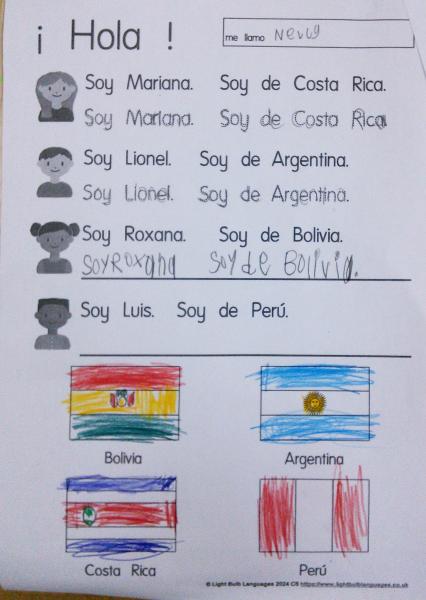
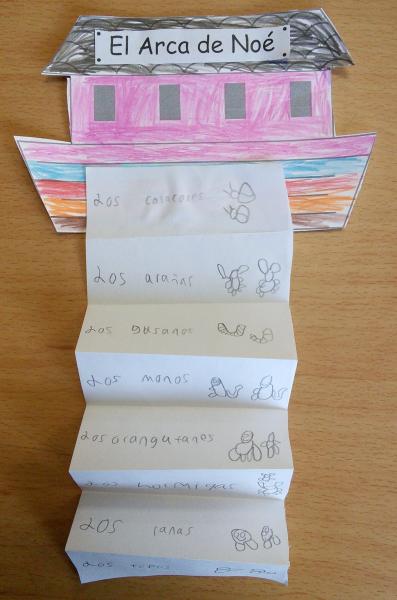
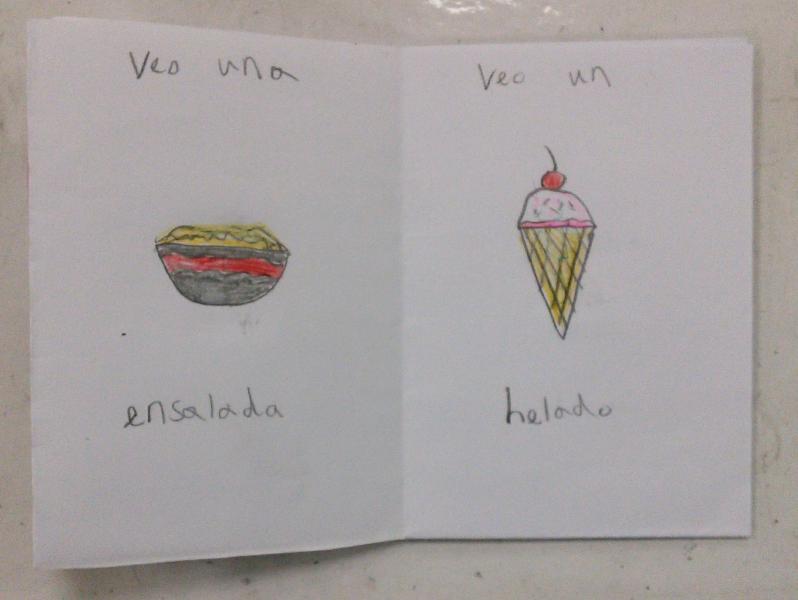
Children’s work in Spanish in Key Stage 1 is not formally assessed. Children take home any written work that they have done in order to share it with the wider school community.
Key Stage 2
The scheme of work for Key Stage 2 Spanish at St Paul’s comprises 18 units. 17 of these are covered in Years 3-6. Unit 18 (Yo soy músico) is taught at the end of a school year if a class has finished the rest of their content. Unit 12 (Los Planetas) is now a part of the Year 5 Spanish curriculum, to complement the Year 5 science curriculum.
The topics are changed regularly to maintain children’s interest and to give children new and different opportunities to be successful. Some units are linked to class topics. The language work often takes place after the class topic so that children can bring their prior knowledge to enhance the language work. The order of themes or topics is otherwise quite random. Importantly, though, topics are chosen which are appropriate and which allow children to access the skills and structures required in their year group. Some units refer to cultural and seasonal events which are often linked to a certain date or time of year.
Phonics are introduced from Year 3. There are only 14 phonemes and their accompanying 20 graphemes that make Spanish different to English.
Each scheme of work document states the grammar and structures (transferable, ‘core’ language) and vocabulary (non-transferable, ‘peripheral’ language) that that particular topic will cover. Some units are sub-divided for simplicity.
The scheme of work and its resulting lessons are structured in such a way as to build the language up gradually in small steps. This ensures that all children can access the content. Children receive extra support for activities as and when necessary.
IMPLEMENTATION
All Key Stage 1 children have one session a week of Spanish, lasting about 40 minutes.
All Key Stage 2 children have one session a week of Spanish. The sessions are of differing lengths, but, on average, the children receive an hour a week of dedicated language teaching throughout Key Stage 2. The lessons take place during class teachers’ PPA time.
Spanish is taught by a peripatetic subject specialist.
Each lesson begins with speaking and listening activities. Usually these activities are used to revisit prior learning and then to introduce and practise the new language. If the lesson is the first in a new topic, the new language is introduced at the start of the lesson.
These speaking and listening activities are whole-class and teacher-led to build confidence, consolidate pronunciation and ensure understanding. Children also often work together in pairs to help each other to practise the language. These activities often incorporate games and songs.
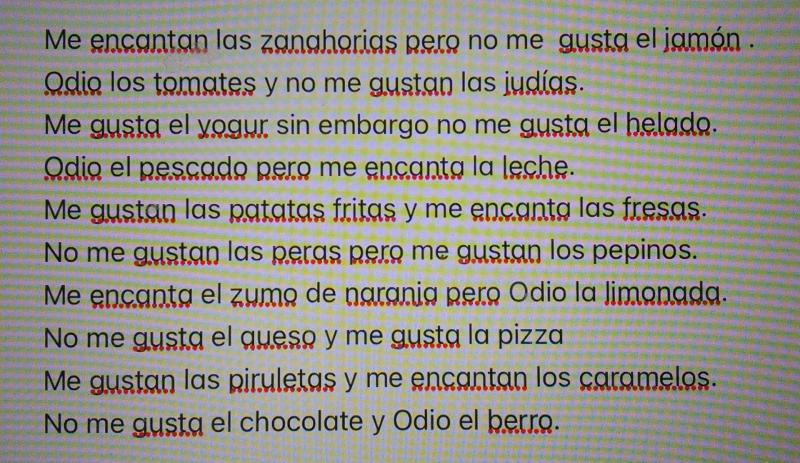
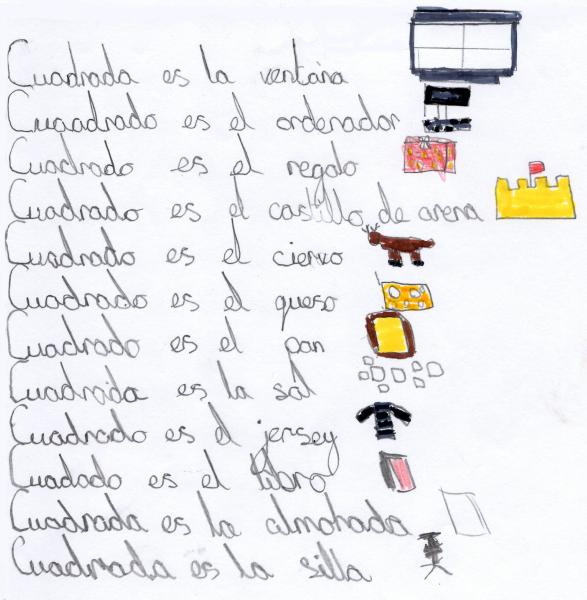
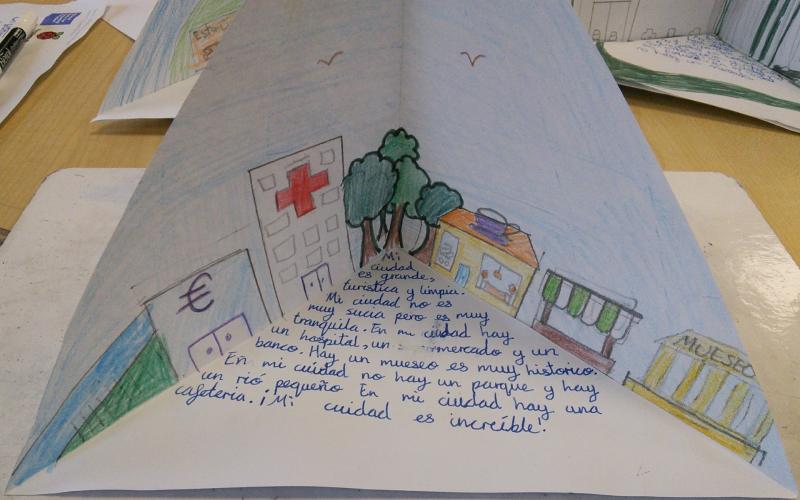
Written work takes place once the necessary language is secure. Writing does not take place every lesson - it depends where the children are in the learning process within a topic. Some writing is formal and done in books, while at other times the children use letter cards, word cards or mini-whiteboards to create their new meaning, as these are less threatening and easy to edit. Photographic evidence is kept of this writing for assessment purposes. Formal writing tends to be a summative piece at the end of a topic or part of a topic.
When a new topic is started, language is built up gradually in small steps from word level, giving all children an equal opportunity to engage with the new content. These words are then built into phrases, sentences or short paragraphs using the grammatical structure(s) being practised in that unit.
Spanish
| Title | Version | Description | Size | Hits | Download |
|---|---|---|---|---|---|
| docx Spanish-overview-Y1to6 | 296.35 KB | 178 | Download |
IMPACT
Children’s progress is recorded on Excel spreadsheets which are stored on the school network. The children are shown these overviews periodically so that they can see the progress that is being made.
These records indicate to the teacher where a class’s strengths and weaknesses lie and which areas of learning require consolidation.
All children’s learning is informally and formatively assessed during lessons, and subsequent lessons are sometimes altered and/or new activities added to practise further learning which has not “stuck” or to counter misunderstandings.
At the end of Year 6, brief information about the children’s attainment, confidence and attitude towards language learning, as well as a piece of written work completed in Year 6, is shared with the Languages Subject Leaders of the secondary schools which the children will be attending.
ASSESSMENT
Each unit of the scheme of work cross-references the learning to the national curriculum attainment targets. This ensures that by the time children finish Year 6, they are able to operate in complex sentences and can write at text length, using the grammar structures outlined by the national curriculum for KS2 Languages.
Each unit of the scheme of work lists the “I can” statements against which the children’s progress will be assessed.
EARLY YEARS
Spanish teaching and learning begins for our children in Reception. Here, the children focus on listening and speaking skills. They sing songs and recite finger rhymes. They read along with short story books in the target language and retell simplified versions of the stories. Children have the opportunity to use puppets and other toys to practise and perform the language. The Reception lessons are based on the Minilinguals and Jolie Ronde EYFS publications.
COMPETITIONS / AWARDS
Each week one child from each class who has worked particularly hard or who has impressed the teacher is chosen to be the Spanish star of the week.
Occasionally, children’s written work is submitted for inclusion in Write Away! magazine. This is a magazine which celebrates the writing that primary children do in their language lessons (https://lightbulblanguages.co.uk/writeaway.htm)