
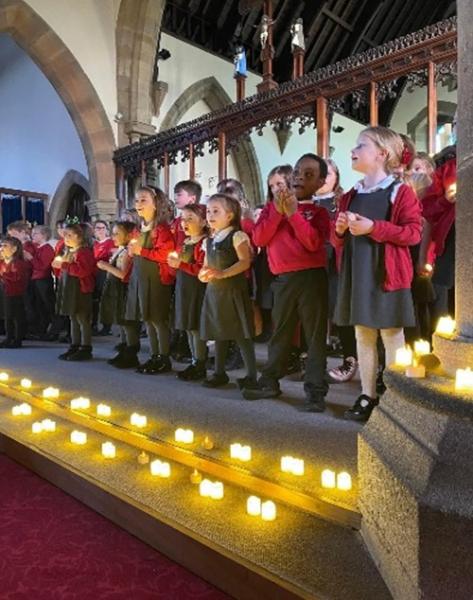
'The school is often filled with music and singing.' (Ofsted 2025)
Our vision at St. Paul’s is to inspire the smallest seeds to flourish so that everyone can reach their full potential. Through our Music curriculum and wider school opportunities, we want our children to develop a passion for a wide range of musical activities, styles and genres. We also aim to develop the knowledge, skills and capabilities necessary for mental, emotional, social and physical wellbeing in our children, now and for their future.
The National Curriculum for Music aims to ensure that all pupils:
- perform, listen to, review and evaluate music across a range of historical periods, genres, styles and traditions, including the works of the great composers and musicians
- learn to sing and to use their voices, to create and compose music on their own and with others, have the opportunity to learn a musical instrument, use technology appropriately and have the opportunity to progress to the next level of musical excellence
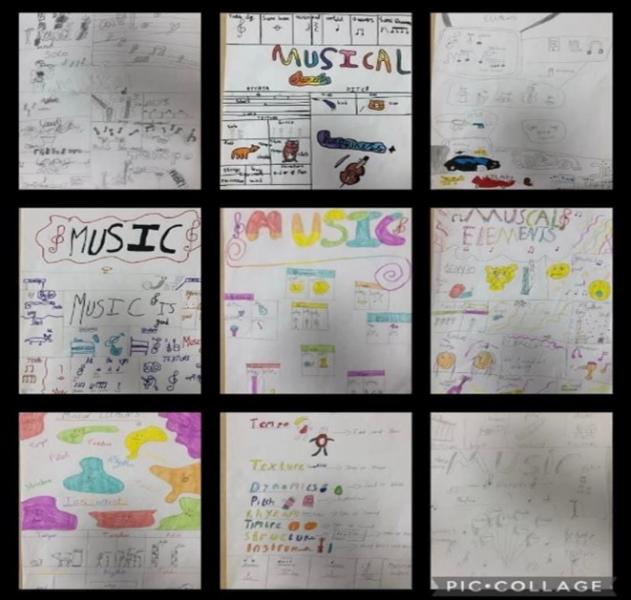
- understand and explore how music is created, produced and communicated, including through the interrelated dimensions: pitch, duration, dynamics, tempo, timbre, texture, structure and appropriate musical notations
Our Music Curriculum:
Intent
At St. Paul’s we believe every child is a successful musician and we want them to aspire to develop a life-long appreciation of music. We aim to achieve this by developing children’s confidence and responsiveness to a wide range of music, by exploring their voices and a range of untuned and tuned percussion instruments. Furthermore, we aim to extend children’s skills, knowledge and appreciation of music from different cultures and styles, offering opportunities to perform music in a range of settings and purposes. Through our progressive curriculum, we further children’s knowledge of the inter-related dimensions, the concept of musical notation and their understanding of how ICT can enhance musical activities. We believe music can develop each child’s potential through activities to enhance social and organisational skills, self-confidence, resilience, leadership qualities and spiritual enrichment.
Implementation
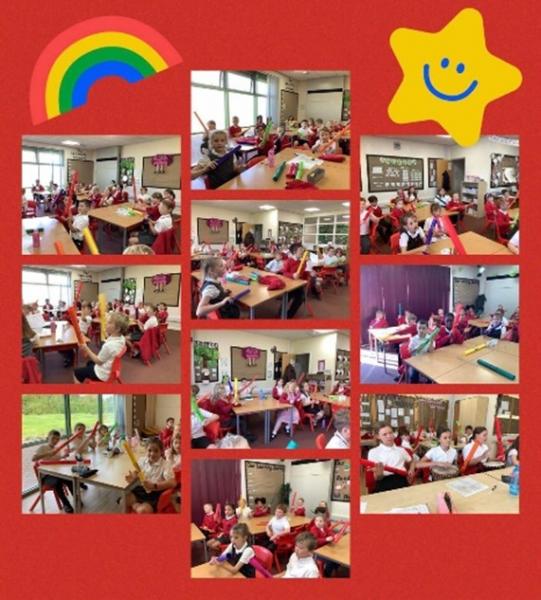
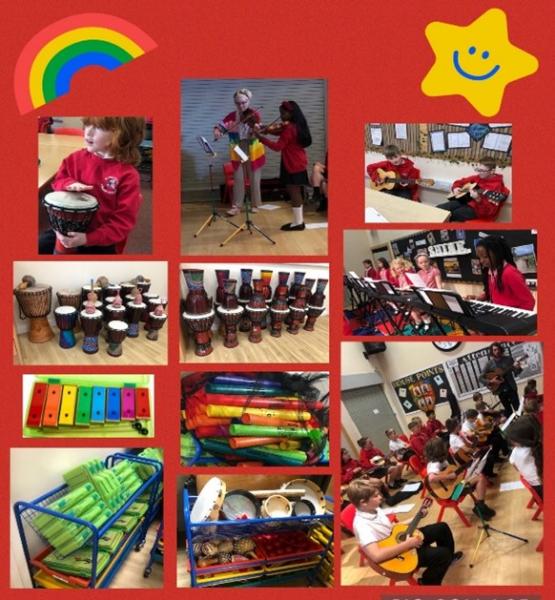
Our curriculum music teacher delivers weekly music lessons throughout the school from year 1 to year 6, using Charanga units as a basis and utilising various other resources to further enhance learning. Music lessons involve active listening, singing, moving, clapping and playing along to music using a range of instruments and body percussion, including boom-whackers, chime bars and djembe drums. Lessons are taught in the relative year group classrooms and children have access to tuned and un-tuned percussion instruments, an interactive whiteboard and iPads for music ICT.
A varied range of listening material forms an integral part of music lessons, often inspired by school topics, seasons, everyday life and events. Selected works represent different historical periods, musical genres, ensembles, cultures, styles and traditions from around the world and include examples from the Model Music Curriculum recommended listening lists for each year group.
Singing is an integral part of everyday school life, featuring not only in music lessons but also throughout the whole curriculum, in sing and praise, shared worships, events, productions and concerts both in and out of school.
Please see below Whole School Music Overview:
Impact
St. Paul’s C.E. Primary School believes that music is an essential, enriching element in the education and development of children. We aim to develop children’s responsiveness to a wide range of music from different cultures and styles, their ability to communicate feelings and ideas through music, build confidence in creating sounds and playing a range of instruments, extend their knowledge of the inter-related dimensions of music, basic notation and understanding of how ICT can enhance musical activities, as well as provide various enriching opportunities to perform and experience music in a range of settings.
Assessment
Children will be assessed against their skills in Music at the end of each half term. The music teacher will base this assessment around children’s ability and techniques within each area.

Early Years
Learning related to Development Matters Music Statements can be found in the following 3 areas of the EYFS Statutory Framework:
Communication and Language * Physical Development * Expressive Arts and Design
Music is important in the Early Years Foundation Stage as it helps children's development in several areas. Singing songs and rhymes together is a great way to develop their communication and language skills in a fun and engaging way. Singing and dancing also helps children express their feelings and ideas, and share them with others, which reinforces positive relationships with adults and other children. Music activities are great for helping build children's confidence, encouraging them to interact with each other, and helping them learn to participate in group activities. Music is also excellent for their physical development. They learn to move in a range of new ways as they dance in time with the music, or play musical instruments to a tune.
EYFS children and staff have daily access to a range of percussion instruments and a large collection of music, including Nursery Rhymes, Phonics and Counting songs, Seasonal and Everyday Songs. Children attend a weekly Sing and Praise session (led by our music teacher) along with the rest of KS1/2 and take part in workshops ran by music practitioners e.g. Tiny Tweeties. EYFS children experience putting on a performance for an audience, when taking part in their Nursery Rhyme recital, Christmas sing-along and end of year production.
Enhanced Music Provision
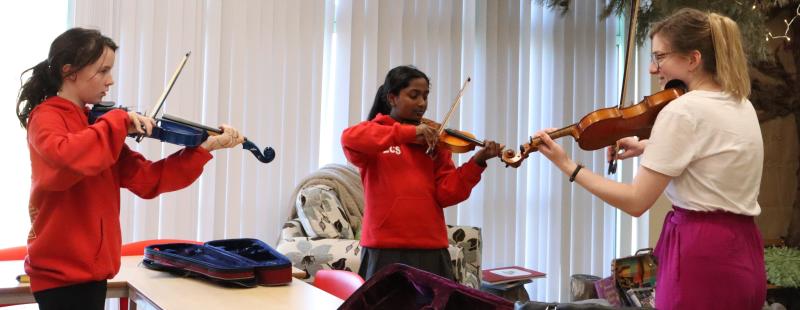
Extra-curricular instrumental lessons are optional for KS2 children and delivered by visiting music tutors. Progress is monitored using systems like Music Medals and ABRSM Graded Exams and children are encouraged to perform in end of term school concerts. Currently we offer violin, keyboard and guitar.
KS2 children are given the opportunity to join the school choir and partake in various community events i.e. carol singing in the local community, collaborative concerts with other local primary and secondary schools, events organised with Music Connects Sunderland (formally known as Sunderland Music Hub).
Children experience a range of live music events including visiting musicians performing in rock concerts, ceilidh bands and pantomimes, as well as in-school concerts, productions and nativities etc…
Our music teacher is a member of Sunderland Music Hub https://sunderlandmusichub.org.uk/ and Sunderland Symphony Orchestra https://www.sunderlandso.org.uk/ allowing us to engage with various musical events and opportunities i.e. The Big Sing and Peter and the Wolf.
Mrs Boyd also has her own child-friendly YouTube Channel which contains various videos and playlists that relate to some of the learning in music lessons; //www.youtube.com/@mrsboyd4music726>">http://www.youtube.com/@mrsboyd4music726 The contents are updated regularly and provide children access to resources to continue and share their learning at home. Children are encouraged to continue their musical learning beyond our school setting, with transitional collaborative music concerts at Venerable Bede Academy and various Music Connects Sunderland events including projects with other local schools and venues, and opportunities to join Sunderland Youth Choir and Sunderland Youth Orchestra.
Please see the below our current Music Development Plan overview:
Music Development Plan
| Title | Version | Description | Size | Hits | Download |
|---|---|---|---|---|---|
| docx SP Music Development Plan OVERVIEW 2025-26 | 352.74 KB | 64 | Download |
Awards
St Paul’s Primary School was nominated by Sunderland Music Hub in 2021 and is now recognised as a Music Mark school.