
Our Vision
At St Paul’s C.E. Primary School, our vision is to “inspire even the smallest seeds to flourish, so that everyone can reach their full potential.” Through our Mathematics curriculum and wider school opportunities, we aim to nurture confident, enthusiastic and resilient mathematicians who are ready to apply their skills in the real world.
We want our children to have high expectations of themselves and their learning, and to see Mathematics not just as numbers and symbols, but as a vital tool for understanding and interacting with an ever-changing world. We believe that meaningful, rich discussions with peers are just as important as completing calculations. At St Paul’s, Maths is a collaborative, purposeful and exciting subject that helps children thrive in school and beyond.
-
The National Curriculum Aims
The 2014 National Curriculum for Mathematics sets out three key aims:
- Fluency: To become fluent in the fundamentals of mathematics through varied and frequent practice.
- Reasoning: To reason mathematically by following lines of enquiry, developing arguments and justifying conclusions using mathematical language.
- Problem Solving: To solve problems by applying mathematics to a variety of contexts, breaking down problems into manageable steps and persevering to find solutions.
We are committed to these aims and embed them into every aspect of our curriculum.
National curriculum in England: mathematics programmes of study - GOV.UK (www.gov.uk)
Our Maths Curriculum:
Maths
| Title | Version | Description | Size | Hits | Download |
|---|---|---|---|---|---|
| docx EYFS Maths Overview | 308.58 KB | 227 | Download | ||
| docx Y1-2 Y3-4 WR Planning for website | 422.62 KB | 143 | Download | ||
| docx Y5 Maths Overview | 315.10 KB | 134 | Download | ||
| docx Y6 Maths Overview | 315.67 KB | 110 | Download |
Please see our calculation policy below:
Intent
Our curriculum is underpinned by five core aims. At St Paul’s, we want all pupils to:
- Develop strong conceptual understanding and make links across different areas of Maths.
- Achieve fluency in number and recall key facts with automaticity.
- See Maths as relevant and useful in the real world – “the sky’s the limit!”
- Show positive attitudes and confidence in their mathematical ability.
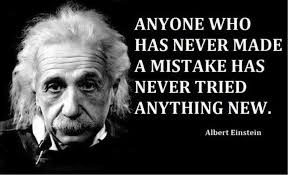
- Be curious, resilient, and collaborative learners who are not afraid to make mistakes.
We believe that all pupils can succeed in mathematics and should experience success, whatever their starting point.
Implementation
To deliver our intent effectively, we:
- Follow the National Curriculum supported by the White Rose Maths scheme.
- Teach through the CPA approach – Concrete (using physical resources), Pictorial (visual representations), and Abstract (numbers and symbols).
- Ensure consistency across school using a shared Calculation Policy.
- Prioritise reasoning and problem-solving in every lesson, making sure all children can articulate their thinking.
- Use mixed-age planning in KS1 and Lower KS2 to support whole-class teaching, following tailored White Rose schemes of learning for Years 1/2 and 3/4.
Daily Practice:
- Lightning Maths sessions (Years 1–6): Quick, 10–15-minute daily sessions focusing on fluency in number facts, subitising, place value, and calculation.
- Memory Joggers: Daily revision activities reviewing previous learning to support long-term retention and vocabulary development, guided by NCETM resources.
In all classes, Maths is designed to be engaging and inclusive. We embrace talk, encourage mistakes, and foster resilience and confidence in every learner.
Mixed Age Mathematics Teaching
We understand that children progress at different rates and learn best when teaching is well-structured, consistent and responsive to their needs. In line with this, we use the White Rose Mixed Age Scheme of Learning to support our mixed-year group teaching in Mathematics.
This approach is backed by research and shaped by feedback from schools across the country. It enables us to teach pupils of different year groups together while still meeting the specific expectations of the National Curriculum for each year.
Which Year Groups Are Taught Together
We currently teach Maths in the following mixed-age classes:
- Year 1/2
- Year 3/4
This allows us to deliver high-quality, inclusive teaching where children revisit and build on key learning over time.
Impact
We want all our pupils to leave St Paul’s with:
- A deep, secure and adaptable understanding of mathematics.
- The confidence to apply skills independently and explain their reasoning clearly.
- A positive attitude towards Maths, with the ability to connect their learning to real-life situations.
Our children demonstrate strong subject knowledge and enjoy discussing their learning. They know that Maths is valuable beyond the classroom and supports a wide range of future opportunities.
Assessment
We use both formative and summative assessment to ensure progress for every child. This includes:
- Daily assessment through questioning, marking and discussion.
- White Rose end-of-block assessments to track progress in each year group.
- End of KS1 non statutory Sats.
- Year 6 SATs preparation using past test materials.
- Moderation at the end of each Key Stage.
- Ongoing book scrutiny, pupil voice, and progress reviews in staff meetings.
- Formal reporting of attainment and progress to parents annually.




Early Years
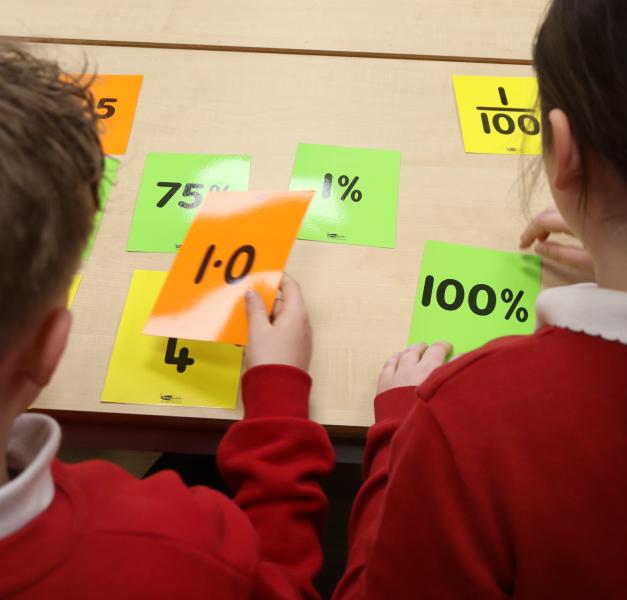
In EYFS, our youngest children begin their mathematical journey through the Development Matters and Early Learning Goals. Children learn through play and exploration, both indoors and outdoors, with access to high-quality, accessible maths resources.
Using a maths mastery approach, children are paired with talk partners to support vocabulary development and reasoning. Teachers provide rich opportunities to count, explore patterns, describe shapes and solve simple problems. No child is left behind – with daily interventions in place to ensure all children keep pace.
SEND
We are fully inclusive and ensure that all learners, including those with SEND and EHCPs, access a meaningful maths curriculum. We use discussion, collaborative tasks, and targeted support to help children express themselves using mathematical language. Where appropriate, pupils are set SMART mathematical targets that are reviewed termly.
Our maths progression document can be viewed here Maths_Progression_Map_Sep_2022.pdf
Automaticity & Fluency
As pupils progress through school, the reliance on automaticity of basic facts increases exponentially. Pupils must recall multiple facts quickly to solve complex problems. Developing fact fluency – the ability to recall number facts from long-term memory without counting or effort – is key to mathematical success.
We prioritise this at St Paul’s through consistent practice and engaging activities, helping all children become efficient, accurate, and confident mathematicians.
If you'd like to explore our curriculum further, please get in touch with Mrs Myers or Mrs Burn – we'd be delighted to share our love of mathematics with you.